Why Agency Growth Often Breaks in Operations First
Growth sounds good until the backend starts showing cracks.
A digital agency can be signing new clients, launching campaigns, publishing content, building websites, and running deliverables every week while still feeling messy behind the scenes. From the outside, the business looks busy and active. Internally, the team may be chasing missing assets, unclear approvals, late updates, scattered tasks, delayed reports, and client requests that live across too many places.
Picture a typical week inside a growing agency. Monday starts with the founder reviewing what should have been finished last week. Tuesday brings two new client kickoffs and three pending approvals from existing clients. Wednesday, someone notices a report was supposed to go out the day before. Thursday, a designer is waiting on copy that a writer is waiting on a brief that an account manager is waiting on a client to confirm. Friday, the founder spends two hours figuring out which tasks slipped through and rebuilding the picture in their head.
The work is getting done, but the delivery process feels heavier than it should.
This is where operations support for digital agencies becomes important.
The problem is not always more marketing. It is not always more sales. It is not always the need to hire another strategist, designer, or account manager. Sometimes, the real issue is that the agency has outgrown the way work is being organized, followed up, and delivered.
Growth Adds Pressure to Weak Operations
When an agency is small, the founder can usually hold everything together.
They remember which client needs a report. They know who still has not sent website access. They know which designer is waiting on copy. They know which project is delayed because the client has not approved something. They know which task was mentioned in Slack, email, or a meeting.
This works at five clients. It works at eight. Somewhere between ten and fifteen, the system starts breaking down. The founder is no longer keeping the agency running through structure. They are keeping it running through memory and effort, and that approach has a ceiling.
But as more clients come in, this mental tracking becomes a liability. Harvard Business Review captured this pattern in their classic piece on why entrepreneurs do not scale, pointing to the same shift: the habits that drive early growth often become the constraints that cap it.
The founder becomes the operating system of the agency. Every unclear task, missing update, and unresolved question flows back to them. Even if the team is talented, the agency can still feel heavy because the structure around the work is weak.
That is why operations support for digital agencies is not just admin help. It is support around the recurring backend work that keeps client delivery moving. Admin work covers individual tasks. Operations work covers the system those tasks live inside.
The First Signs Your Agency Needs Operations Support
Most agencies do not wake up one day and suddenly realize operations are broken. The signs usually show up slowly.
Client onboarding starts to feel different every time. One client gets a smooth setup. Another waits days for next steps. Another has missing access, missing brand files, or unclear kickoff notes.
Reports become rushed. Updates are done at the last minute. Tasks are discussed, but not always documented clearly. Team members ask the same questions repeatedly because the process is not centralized.
The agency is still delivering work, but the delivery feels harder than it should.
Common signs include:
- New clients are not onboarded consistently
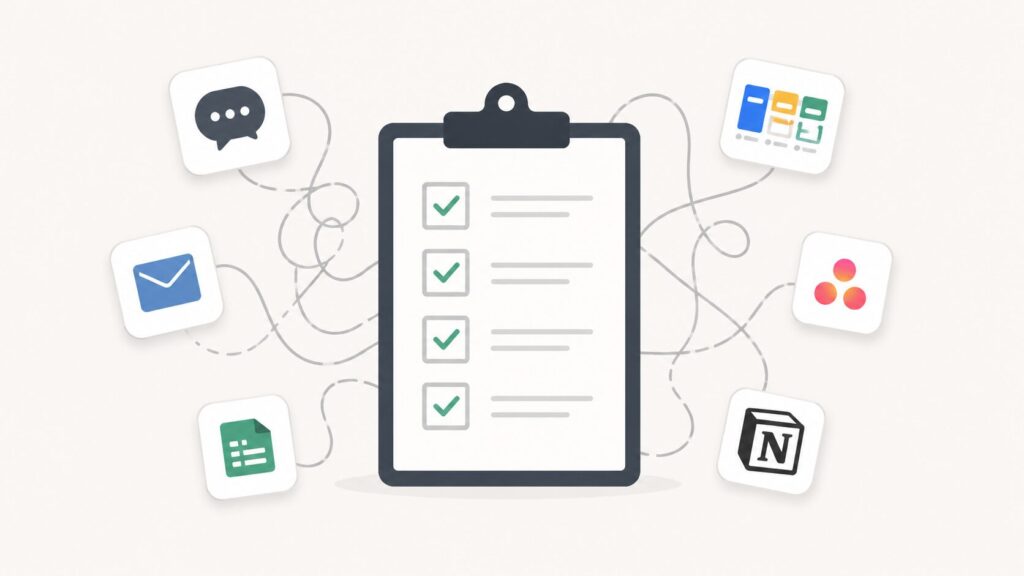
- Tasks are scattered across email, Slack, Asana, ClickUp, Notion, or chat
- Founders keep checking whether work has moved forward
- Client updates are delayed because nobody has gathered the details
- Handoffs between team members are unclear
- Recurring admin tasks keep getting pushed aside
- The team works hard, but visibility is still weak
- Status meetings turn into information-gathering sessions instead of decision-making sessions
- The same questions get asked and answered multiple times across different threads
- Nobody is sure who owns the recurring backend work, so it gets done inconsistently or not at all
- Client retention conversations focus on relationships, but slipping operations are quietly eroding trust
These are not always talent problems. Often, they are operations problems. A good team without good systems will still produce uneven results. A good system gives the team something to work inside instead of something to work around.
Why More Clients Can Make Delivery Messier
More clients do not just mean more revenue. They also mean more moving parts.
Every new client adds more access requests, more kickoff notes, more deadlines, more reporting expectations, more approvals, more meetings, more assets, and more communication loops. The math is not linear. Doubling the client roster usually more than doubles the coordination work, because each client interacts with the rest of the agency’s operations in different ways.
Without a clear operating structure, each client becomes a separate manual process.
This creates inconsistency. One account manager may handle onboarding one way. Another may handle it differently. A founder may step in to fix gaps. A strategist may chase missing items. A VA may help, but without a clear process, they may still need constant direction. This is part of why the old outsourcing model of just adding cheaper hands no longer works. More people without better structure usually means more coordination, not more output.
Inconsistency also creates a quiet client experience problem. When clients talk to other clients of the same agency, they sometimes notice the difference. One client says their onboarding was organized and detailed. Another says theirs felt rushed. The agency has not changed, but the experience has, because the process is being rebuilt every time instead of run from a template.
That is where operations support for digital agencies can create a more stable backend.
The goal is not to make the agency more complicated. The goal is to make the recurring work easier to repeat.
What Operations Support for Digital Agencies Can Cover
The exact support depends on the agency, but most digital agencies need help around similar backend areas.
Client Onboarding
Client onboarding is one of the first places operations breaks.
A cleaner onboarding process can include collecting intake forms, requesting access, organizing brand assets, tracking missing items, preparing kickoff materials, and making sure the client knows what happens next.
A solid onboarding flow usually has a clear sequence. Welcome email goes out. Intake questionnaire is sent and tracked. Access requests are bundled into one message instead of trickling out over a week. Brand assets are organized into a shared folder structure that the team already knows how to use. The kickoff call has an agenda the client has already seen. After the call, the client receives a recap with next steps and timeline expectations.
Good onboarding reduces confusion for both the client and the internal team. It also signals professionalism in the first two weeks of a relationship, which is when client trust is most fragile.
Task Follow-Up and Coordination
Digital agencies run on moving parts.
Someone needs to check what is pending, what is blocked, what needs review, and what is waiting on a client or internal team member. Without this layer, tasks sit longer than they should.
In practice, this looks like a recurring weekly check across active projects: identifying which tasks are stuck, which clients have not responded to requests, which approvals are overdue, and which deliverables need a nudge to keep moving. The work itself is not glamorous, but the absence of it is usually felt as project drift, missed deadlines, and clients wondering what is happening.
Operations support helps keep work visible and moving.
Reporting Support
Reports are often important, but they are also easy to delay.
The team may be focused on delivery, while reporting becomes a last-minute task. Operations support can help gather updates, organize notes, prepare recurring report sections, and keep status communication consistent.
A reporting rhythm that runs on its own usually has a few elements: a clear template that does not get rebuilt every month, a defined source for each data point, a person responsible for each section, and a calendar that triggers the reporting work before the deadline rather than at the deadline. When this rhythm exists, reports stop being a scramble and start being routine.
Handoffs and Request Tracking
Work often moves between strategists, designers, developers, writers, account managers, and clients.
If handoffs are unclear, details get lost. Operations support helps make requests easier to track and transfer from one person to another with the right context.
A clean handoff includes the original brief, the current status, what the next person needs to do, what they need to watch out for, and where the relevant files live. When this is missing, the receiving person spends time reconstructing context that someone else already had. Multiply that across a week of handoffs and the agency is paying a real time tax for unclear transitions.
Process Cleanup
Recurring friction usually points to a process gap.
If the same question, delay, or mistake keeps happening, that is a sign something needs documentation, clarification, or restructuring. Operations support can help identify these repeat issues and turn them into clearer workflows.
The pattern is often the same. A team member solves a problem once. Someone else hits the same problem two weeks later and solves it again. A third person hits it the next month and creates a slightly different solution. Now there are three approaches to the same situation, no documentation, and the next person who joins inherits the confusion. Process cleanup catches these patterns and turns them into one clear way to handle the work.
Operations Support Is Not Just Random Task Help
There is a difference between task help and operations support.
Task help usually means someone completes individual assignments. Operations support looks at the recurring backend work around delivery and helps make it more consistent.
For example, uploading a report is a task. Creating a repeatable reporting checklist is operations support.
Sending one access request is a task. Building a client onboarding tracker is operations support.
Following up once is a task. Creating a rhythm for checking blockers every week is operations support.
This distinction matters because digital agencies do not just need more hands. They often need better structure around the hands they already have. Adding another person to a system that does not work usually creates more coordination overhead, not less. Adding structure first means that the next hire can step into a defined role instead of inheriting a confused one.
How Operations Support Differs from Hiring Another Account Manager
This question comes up often. If the agency needs help, why not just hire another account manager or project manager?
That can be the right move in some cases. But hiring is a long commitment, and the role is built around running clients, not around designing the system the clients run inside.
Operations support is usually focused differently. The goal is to make the system itself work better. That means looking at the agency’s processes, identifying the recurring drag points, building cleaner workflows, and creating the documentation and trackers that the existing team can use. Once that structure exists, every account manager, including future hires, has a stronger foundation to work from.
In practice, many agencies use both. Operations support cleans up the backend, and account managers run the client work inside the cleaned-up backend. The two are complementary, not competing. For agencies that want to grow without immediately committing to a full internal team, this is part of how to scale without hiring everyone full-time.
Why Founders Stay Too Involved
Many founders stay too involved not because they want to micromanage, but because the business still depends on their memory.
They know the exceptions. They know the client history. They know why something was delayed. They know what was promised on the call. They know who is supposed to do what next.
When that knowledge is not documented or structured, delegation stays weak.
The team may be capable, but the founder still becomes the fallback for every unclear situation. A team member runs into something they have not seen before, asks the founder, and the founder gives the answer from memory. The exchange feels efficient in the moment. Repeated fifty times a week, it is the reason the founder cannot step away from operations.
Operations support helps reduce that dependency by making the work more visible, trackable, and repeatable. The knowledge in the founder’s head starts moving into shared systems, which means the team can find answers without asking, and the founder can spend more time on work only they can do.
Better Operations Improve the Client Experience
Clients may not see your backend systems, but they feel the effects.
They feel it when onboarding is smooth. They feel it when updates arrive on time. They feel it when requests are acknowledged. They feel it when reports are organized. They feel it when the team knows what is happening without asking the same questions again.
They also feel it in subtler ways. When the same point of contact is briefed before every meeting, the client does not have to repeat information. When a follow-up email arrives within hours of a call instead of days later, the client perceives the agency as attentive. When deadlines are met without drama, the relationship feels stable. None of this is a strategy decision. It is the result of operations doing their job in the background.
Cleaner operations create a calmer delivery experience.
For agencies, that matters because client retention is not only about strategy or creative output. It is also about trust, communication, and consistency. Clients leave agencies for many reasons, but a quiet one is the slow accumulation of small operational frustrations. Each one is small enough to ignore. Together, they shape how the client feels about working with the agency.
When to Get Operations Support
A digital agency may need operations support when growth starts creating pressure in delivery.
This is especially true if the agency already has recurring client work, but the backend is still too manual.
It may be time to get support if:
- The founder is still checking too many routine details
- Client onboarding is inconsistent
- Reports and updates take too much effort
- Tasks are scattered across too many tools
- Team members are working, but visibility is unclear
- Client delivery depends too much on memory
- Growth is creating more coordination drag than expected
- The team is technically full but somehow always behind on internal work
- New hires take a long time to ramp up because there is nothing for them to learn from
- Client conversations regularly include apologies for delays the team did not realize were happening
In these cases, operations support for digital agencies can help stabilize the backend before the agency hires too quickly or adds more tools without fixing the structure.
Tools Help, But Structure Matters More
Many agencies already use tools like Asana, ClickUp, Notion, Slack, Google Workspace, or a CRM.
Those tools can help, but they do not automatically create clean operations.
A project management tool only works if tasks are entered clearly, assigned properly, updated consistently, and reviewed regularly. A CRM only works if the process around lead tracking, follow-up, and client movement is clear. A reporting template only works if someone owns the recurring rhythm behind it.
This is why agencies sometimes spend months evaluating new tools, only to find that the new tool produces the same outcomes as the old one. The tool was rarely the problem. The structure around how the team uses the tool was the real bottleneck. A simple project management setup that everyone follows is more useful than a sophisticated one that nobody fully adopts. Part of building that structure is also being clear on what work belongs in automation versus what belongs with a person, so the tools and the team are not duplicating effort or stepping on each other.
The tool matters, but the operating logic matters more.
What Operations Support Looks Like Day to Day
It helps to make this concrete.
Inside a typical week, operations support might cover: reviewing the active project list and flagging items that have not moved, checking in with team members on blocked tasks, sending a recap of pending client items to the relevant account manager, gathering data points needed for upcoming reports, organizing assets that came in from clients, updating project trackers so everyone has the same picture of status, and preparing materials for the next round of client calls.
None of this is glamorous work. It is also the work that determines whether the agency feels organized or chaotic. When it gets done well, the team has a clear picture of what is happening. When it does not, everyone is operating with partial information, which is when mistakes and delays multiply.
The Goal: Make Delivery Easier to Run
The real goal of operations support is not to make the agency look more organized. The goal is to make the agency easier to run.
That means fewer dropped details. Fewer last-minute scrambles. Fewer founder check-ins. Fewer unclear handoffs. Fewer repeated questions. Fewer manual resets every time a new client comes in.
It also means more predictable client experiences, more capacity for strategic work, and more ability to grow without the founder absorbing every new layer of complexity. Cleaner operations give the agency more room to grow without turning every new client into more backend chaos.
Final Thought
Agency growth often breaks in operations first because the backend was not built to carry more volume.
The marketing may be working. The sales process may be producing clients. The team may be capable. But if onboarding, follow-up, reporting, handoffs, and task visibility are still too manual, growth will keep creating pressure.
That is why operations support for digital agencies matters.
It helps create the structure behind delivery, so the agency can serve clients more consistently without making the founder responsible for every moving part.
Call to Action
If your agency is growing but the backend still feels too manual, it may be time to look at what is making delivery heavier than it should be.
Start here: review the areas where client work gets delayed, scattered, or too dependent on founder involvement. Then decide whether your next move is support, systems, or both.If you want help mapping out which parts of your backend would benefit most from operations support for digital agencies, book a vibe check call and we can look at what is making delivery heavier than it should be.